This post is based on my own analysis of Colony (군체), drawing from publicly available interviews, press materials, and my personal viewing of Director Yeon Sang-ho’s previous works. All interpretations are my own.
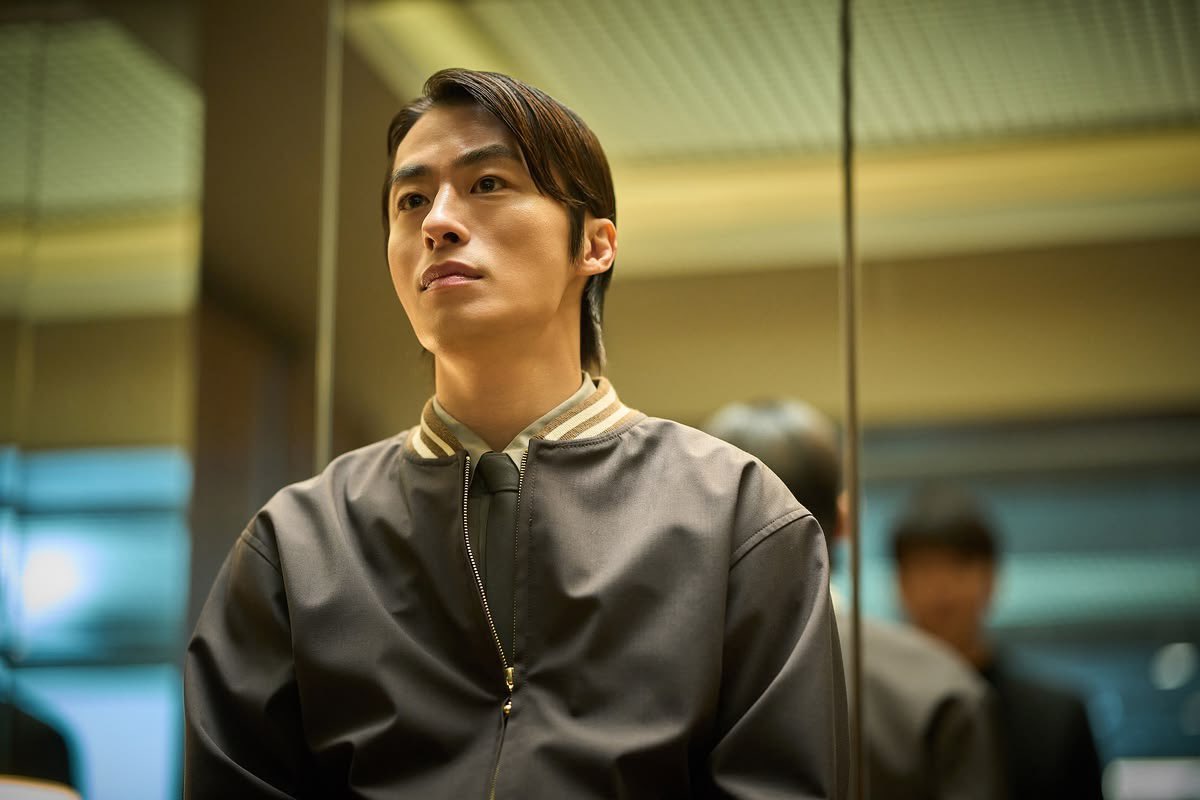
There’s a man standing in the middle of a zombie horde.
He’s not running. He’s not fighting. He’s not getting bitten.
He introduces himself as the vaccine. With a gleam in his eye.
I’ve been watching zombie films for a long time. And I’ve genuinely never seen a villain framed quite like this.
This post is my attempt to make sense of why Colony (군체) feels different — and why, if you loved Train to Busan, this is the one film you shouldn’t sleep on this year.
How Koo Kyo-hwan Got Here
If you’ve been on this channel for a while, you know Koo Kyo-hwan from D.P. — the Netflix original series by director Han Jun-hee, who also served as creative supervisor on Weak Hero Class. In D.P., he played Corporal Han Ho-yeol, the main character’s unlikely, endearingly chaotic guardian angel.
That same actor showed up in the 2020 film Peninsula as Seo Dae-wi — commanding a rogue military unit called Force 631. His screen time wasn’t enormous. But people walked out saying they came for Gang Dong-won and left thinking about Koo Kyo-hwan. That kind of impression.
After Peninsula, Director Yeon Sang-ho called him back for Parasyte: The Grey in 2024 — where he played a gangster who ends up as an unlikely ally to an alien life form inhabiting a human host.
Peninsula. Parasyte. Colony. Three collaborations with the same director. And this time, he’s at the center.
The Question Director Yeon Has Been Asking This Whole Time
Quick note: I’ll be touching on some core setup from Train to Busan and the Netflix original Hellbound. No ending spoilers — but if you want to go in completely fresh, feel free to jump ahead.
Dir. Yeon Sang-ho doesn’t actually make monster movies.
He makes movies where monsters show up — and then asks why humans are scarier.
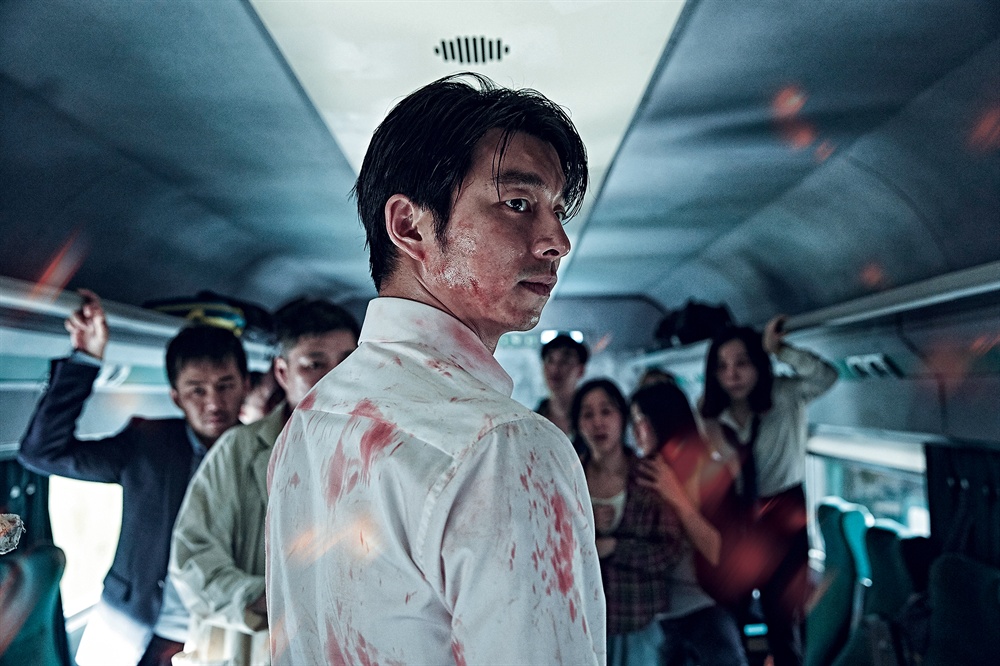
Train to Busan (2016)
Zombies overrun a train cutting across Korea. But the character responsible for the most deaths isn’t a zombie. It’s a corporate executive who barricades the door to another car to save himself.
The zombies are the crisis. The disaster. What Director Yeon wanted to show us was how an existing class system operates when that crisis hits. Even in the face of total collapse — the powerful sacrifice others to survive.
Hellbound (2021)
Here, another layer gets added.
People start receiving what the show calls a 고지 (goji) — a decree. An angel appears and tells you the exact date and time you’ll be dragged to hell. No reason given.
A man named Jeong Jin-su — someone who has never so much as stolen a pencil in his life — receives one. A newborn baby receives one. A being that never had the chance to commit any sin.
When the time comes, the emissaries of hell arrive to carry out what the show calls the 시연 (siyeon) — the execution. There’s no running. No escaping.
And humans cannot tolerate unexplained terror. So a religious organization called the New Truth Society steps in and builds a narrative: you received the decree because you sinned. In the face of senseless violence, humans built a new system. And that system starts controlling everyone.
So the pattern looks like this:
Train to Busan — how does an existing system behave when crisis hits? Hellbound — what happens when humans build a new system in response to fear? Colony — what exactly is a person who designed the crisis itself?
📬 If you want this kind of cultural breakdown in your inbox — I send at least one issue a week through Off Script, my free newsletter. Korean local, cultural layers subtitles can’t catch. Subscribe here: jennieleekdrama.beehiiv.com
What Makes Colony’s Zombies Actually Different
In traditional zombie films, zombies were one of two things. Slow, like the shuffling dead of Night of the Living Dead. Or fast, like the sprinting infected of 28 Days Later. But always driven by instinct — bite, charge, swarm. No thought involved.
Colony’s infected are something else entirely.
Director Yeon said it in his own words:
“The greatest fear in Colony is that it becomes increasingly impossible to predict how the infected will change next.”
It’s not speed. It’s unpredictability.
They share information with each other and evolve in real time. They start on all fours and learn to stand upright. They stack on top of each other, building living walls out of their own bodies. The choreographer who designed their movement — who also worked on Train to Busan and Peninsula — said he’d never created anything like it before.
“Communication is getting faster through social media. And the faster it gets, the more I felt that opinions start moving as one.”
Could this be his way of visualizing the collective madness of social media — through Colony’s infected? I think there’s something to that reading.
Seo Yeong-cheol and Why Koo Kyo-hwan Was Always the Right Choice
Seo Yeong-cheol reads to me as a villain with something magnetic about him — powerful, but somehow precarious. A brilliant biologist who engineered the outbreak from scratch. The system he built is consuming everyone around him — and he’s standing right in the middle of it, completely untouched.
Because he built it.
Koo Kyo-hwan talked about how he approached playing him.

“I kept the performance as simple as possible. This character already has so many layers. I didn’t feel the need to put his backstory on display.”
And then:
“Even without overwhelming physical power, I always want to show at least one moment where the audience thinks — this guy is completely unhinged. I wanted people to feel that Seo Yeong-cheol is someone you simply cannot reason with. Someone with an unshakeable conviction. That’s terrifying enough on its own.”
That man standing completely still in the middle of a zombie horde? That’s the moment he’s describing.
He’s not an outsider. He’s the architect.
📬 Off Script — my free weekly newsletter — is where I go deeper on Korean drama and film than any video format allows. If that sounds like your kind of read: jennieleekdrama.beehiiv.com
Where It’s Playing and Why It Matters
Colony has already been pre-sold to 124 countries. It’s been officially selected for the Midnight Screening section at Cannes — out of competition.
Train to Busan. Peninsula. Colony. All three of Director Yeon Sang-ho’s live-action zombie films have made it to Cannes. That’s not a coincidence. It’s a track record.
In the US, it opens August 28th. Well Go USA has also scheduled a 4K rerelease of Train to Busan for August 14th — exactly two weeks before Colony arrives. The implication is clear: remember where this started. See where it’s going.
One Last Thing
In Train to Busan, a class system killed more people than the zombies did. In Hellbound, a religious system built to justify fear controlled the living. In Colony — we meet the person who built the zombie system itself.
Why would someone do that?
I genuinely don’t know yet. And I think that’s the point. Colony opens in Korean theaters May 21st, and I’ll have a review up shortly after. Until then — leave your theories in the comments below.
I read every single one.
📺 Watch the video version here: Train to Busan Was Just the Beginning | Colony 2026 Explained
📖 Free Weak Hero ebook — everything this channel has ever said about Si-eun, Su-ho, and Beom-seok: jennieleekdrama.beehiiv.com
Read More: Train to Busan Was Just the Beginning — What Colony Tells Us About Yeon Sang-ho’s Real Question
답글 남기기