I watched The King’s Warden on opening day in Korea—February 4th, to be exact. Walked out of the theatre, immediately filmed my 🔗“Worth It?” review, and posted it within hours. Nine minutes of thoughts. But honestly? There was so much I had to cut. Things that kept circling back in my mind days later.
The topknot. The 400 hanboks. What happened to his queen? And that raft scene—God, that raft scene won’t stop haunting me.
So here’s the deep dive I needed to write.
The Topknot That Changes Everything
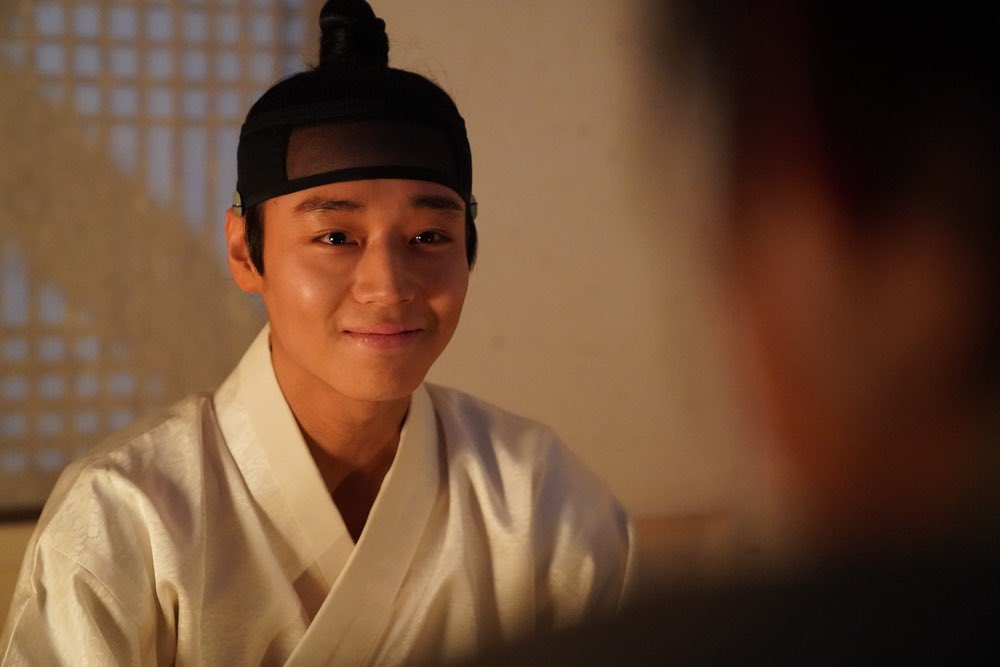
There’s this moment early in the film where I noticed something odd. Danjong—Hong-wi, Lee Hong-wi, the young king—he’s wearing this small topknot on his head. It’s called a sangtu (상투) in Korean. But Taesan, Heung-do’s son, who’s probably around the same age? He’s wearing his hair in braids tied with a ribbon—daenggi (댕기).
Why?
When I figured it out, I had to pause the film. Just sit with it for a second.
Hong-wi is sixteen years old in this film. A tragic boy king, yes. But he’s also something else: a married man.


Understanding Joseon Marriage Customs and Coming of Age
In Joseon society, once a man got married and consummated the marriage, he tied his hair up in a sangtu. It was the marker of adulthood. Not age. Not a ceremony. Marriage. Consummation. That’s when boyhood officially ended.
So when you see Danjong wearing that sangtu under his sangtugwan (상투관)—that distinctive square-shaped crown I broke down in my costume analysis video—you’re looking at a boy who had to become a man way too fast.
Taesan? He’s not married yet. Still unmarried. Still technically a boy.
That one detail. That one small costume choice. It tells you everything about what was stolen from Hong-wi.
400 Hanboks and One White Robe
Now, about those robes. The silk robes that made everyone on social media lose their minds when the official stills dropped.
The production team made 400 hanboks. Four hundred. Just for Hong-wi.
Every scene, every moment—different robes, different layers, different colours. From the royal blue gwanlyongpo (관룡포) that screams “I am king” to the white exile robes that look disturbingly like burial clothes.
This is one of those things you don’t notice on first watch. But once you know? You can’t unsee it. That’s part of the fun of rewatching this film—catching all the visual storytelling you missed the first time around.

What the White Robes Really Mean
But there’s one costume that stayed with me more than any other: the white dopo (도포) Hong-wi wears when he first leaves for exile.
According to an interview with costume director Shim Hyun-seop, that white dopo was designed to deteriorate over the course of Hong-wi’s journey from Hanyang to Yeongwol. As the fabric frayed and dirtied and fell apart, it would mirror Hong-wi’s psychological unraveling.
The costume that carries his inner world and his narrative arc. The garment that, for Park Ji-hoon, became the most beautiful representation of Hong-wi’s sorrow.
I mean… that’s devastating, isn’t it? Beauty and tragedy, woven into the same fabric.
The Queen Who Waited 241 Years
So Hong-wi was married. Which brings us to the question I couldn’t stop thinking about after I left the theater:
What happened to his queen?
Her name was Queen Jeongsun (정순왕후). They married in 1454 when Hong-wi was thirteen years old. Thirteen. At the same age, most of us were worrying about middle school crushes and homework.
After Danjong was dethroned and exiled in 1457, they never saw each other again. Never. She was seventeen when her husband was taken away. When his life ended tragically a year later—at sixteen years old—she was stripped of her title and demoted to commoner status.

She lived to eighty-one. Never remarried. Spent sixty-four years—her entire adult life—in mourning.
Let that sink in. Sixty-four years of mourning for a marriage that lasted three years. For a boy she loved who never got to grow old.
In 1698—241 years after Danjong’s death—King Sukjong finally restored Danjong’s royal title posthumously. And with that restoration, Queen Jeongsun was restored as queen.
Together again. At least on paper. At least in the historical record.
I don’t know how to explain what that does to me. This idea that love—real, enduring, devastating love—can wait centuries for recognition. That loyalty can outlast empires.
Queen Jeongsun never got her happy ending. But she got her title back. She got to be remembered as his queen.
I mean… yeah.
That Raft Scene Won’t Stop Haunting Me
Okay, so in my opening day review, I talked a LOT about the raft scene. And it turns out everyone had the same reaction.
Honestly, if they’d just released that one still of soaking-wet Hong-wi in his white robes, Korea alone could’ve hit 10 million ticket sales. Mutual feelings across the board. (😂)
But here’s what makes that scene so special—it’s not just about Park Ji-hoon looking ethereal in water (though, let’s be real, he does).
It’s a transition scene. From the dignified former king to the exiled criminal. From Hong-wi to just… a boy who’s lost everything.
Everyone else in that scene is flailing around, splashing, panicking as the raft falls apart. But Danjong? He just stands there. Ramrod straight. Unmoving.
Ji-hoon in a super dark traditional sageuk
I’ve always wanted to see Ji-hoon in a super dark traditional sageuk. Yeah, that’s my taste—I won’t apologise for it. This could’ve been peak acting for his twenties (though obviously his thirties will bring even richer performances). The direction fell a bit short for my taste, but still.
Remember this when you watch the raft scene: when that raft’s falling apart and everyone’s flailing around, Danjong just stands there.
It keeps haunting me.
It wasn’t just about getting drenched. You could see this flash of irritation cross his face—irritation at his situation, exhaustion from the brutal exile journey, the bleakness and sorrow of his circumstances all soaking through along with the river water.
Why Park Ji-hoon’s Performance Stands Out
Your Majesty Danjong… even with his silk robes completely soaked through, he really acted like royalty in that scene.
Lee Dong-jin—one of Korea’s most trusted film critics—said something on his YouTube channel that perfectly captures what Park Ji-hoon achieved in this role. He said he was genuinely surprised by Ji-hoon’s performance, admitted he hadn’t seen much of his acting before, but that Ji-hoon held his own among veteran actors who are known for their craft.
And then he talked about the eyes.
“Park Ji-hoon’s eyes are so good,” he said.
“Through the first half of the film, his eyes are so sad, so mournful. And then in the second half, they change.”
The royal bearing, the dignity—it’s not easy to convey that kind of inherent nobility, especially for someone so young. But Ji-hoon did it. You believe he’s a king, even when he’s standing with waterlogged silk robes on a broken raft.
That one scene alone makes the whole film worth rewatching.
A 3-Octave Range and a Cute Chameleon
One of my subscribers—Asuka, who’s been a huge inspiration to me and whose comments I always look forward to—left this brilliant analysis about Park Ji-hoon’s vocal range that absolutely blew my mind.
She wrote: “With a face that expressive, I think we can understand Park Ji-hoon even without words.”
But then she went deeper. She pointed out that his speaking voice is very different from his singing voice—almost like another person. His vocal range? At least three octaves, from G2 to possibly G5 or higher.
To cut the jargon: Ji-hoon’s not only visually expressive, he’s vocally expressive. Which is probably why his character switches can be so drastically and convincingly different.
Asuka’s description: “He’s a very cute chameleon who can change his colours as well as his calls.”
I love that. I love that so much.
“Yoo Hae-jin’s Airbnb”
Okay, I have to share this because it made me genuinely laugh out loud.
I’ve been reading audience reviews on Korean sites, and someone described The King’s Warden as:
“Yoo Hae-jin’s Airbnb. The host is kind, and the guest is handsome.”
I mean… they’re not wrong? That’s basically the entire film in one sentence.
The warmth between Heung-do (Yoo Hae-jin) and Hong-wi (Park Ji-hoon) is the beating heart of this story. That found-family dynamic, the tenderness, the way Heung-do becomes the father figure Hong-wi desperately needed—it’s all there.
And yes, the guest is indeed very handsome.
The Waterside Photo That Hits Different Now
Before I wrap this up, I need to talk about one more thing.
Remember that photo that went viral on social media before the film even opened? Park Ji-hoon by the water—not smiling at the camera, but crouched down low, reaching out to touch the river, his small figure from behind looking like a child at play?
Now I understand why that photo circulated first. Why it went everywhere before any of the tragic stills.

After you watch the film, that image hits completely different. You look at that small crouched figure touching the water and you think: enjoy it while it lasts. Because it won’t last. Because we know how this story ends.
It’s a moment of lightness before the darkness swallows everything. A breath before the drowning.
That’s devastating storytelling, honestly. To make us fall in love with a moment we know we can’t keep.
Final Thoughts
If you want to understand what you’re about to watch—if you want the backstory on King Danjong, the costume symbolism, and Han Myeong-hoe’s karma—I’ve made a whole series that breaks it all down.
Part 1: Korea’s Saddest King [🔗Link]
Part 2: The Costume Breakdown [🔗Link]
Part 3: The Kingmaker Who Killed the King [🔗Link]
Check the links in my video description or on my blog homepage.
And for international viewers still waiting for release dates—I’m tracking everything. Check my pinned comment on YouTube for the latest updates, or follow me here on the blog where I post as soon as I hear anything.
Thanks for reading. Thanks for caring about these details with me. And if you’ve already seen the film—let me know in the comments what detail haunts you the most.
I’ll see you in the next one.
Don’t Miss Updates
Want to know the second tickets drop in your city? Get theater expansions, screening confirmations, and cultural context breakdowns delivered straight to your inbox.
👉 Subscribe to Cultural Bites Newsletter
Weekly drops on Korean drama and film—the layers your subtitles miss, the context that makes rewatches twice as good.
Read More: The King’s Warden: Hidden Details You Completely Missed
- The King’s Warden: 5 Hidden Layers You’ll Wish You Knew Sooner
- The Word “Upset” Doesn’t Cover It: A Curtain Up Class Episode 2 Review
- Weak Hero Class 1: Hidden Details You can’t unsee — Costumes, Callbacks & Cultural Context
- The Raft Broke. So Did Something Else.
- Weak Hero isn’t just an action drama; It’s a cautionary tale — Renewed Version
⛔️ Copyright Disclaimer: All drama footage, images, and references belong to their respective copyright holders, including streaming platforms and original creators. Materials are used minimally for educational criticism and analysis with no intention of copyright infringement.
🚫 Privacy Policy: This site follows standard web policies and does not directly collect personal information beyond basic analytics for content improvement. We use cookies to enhance user experience and may display advertisements.
답글 남기기