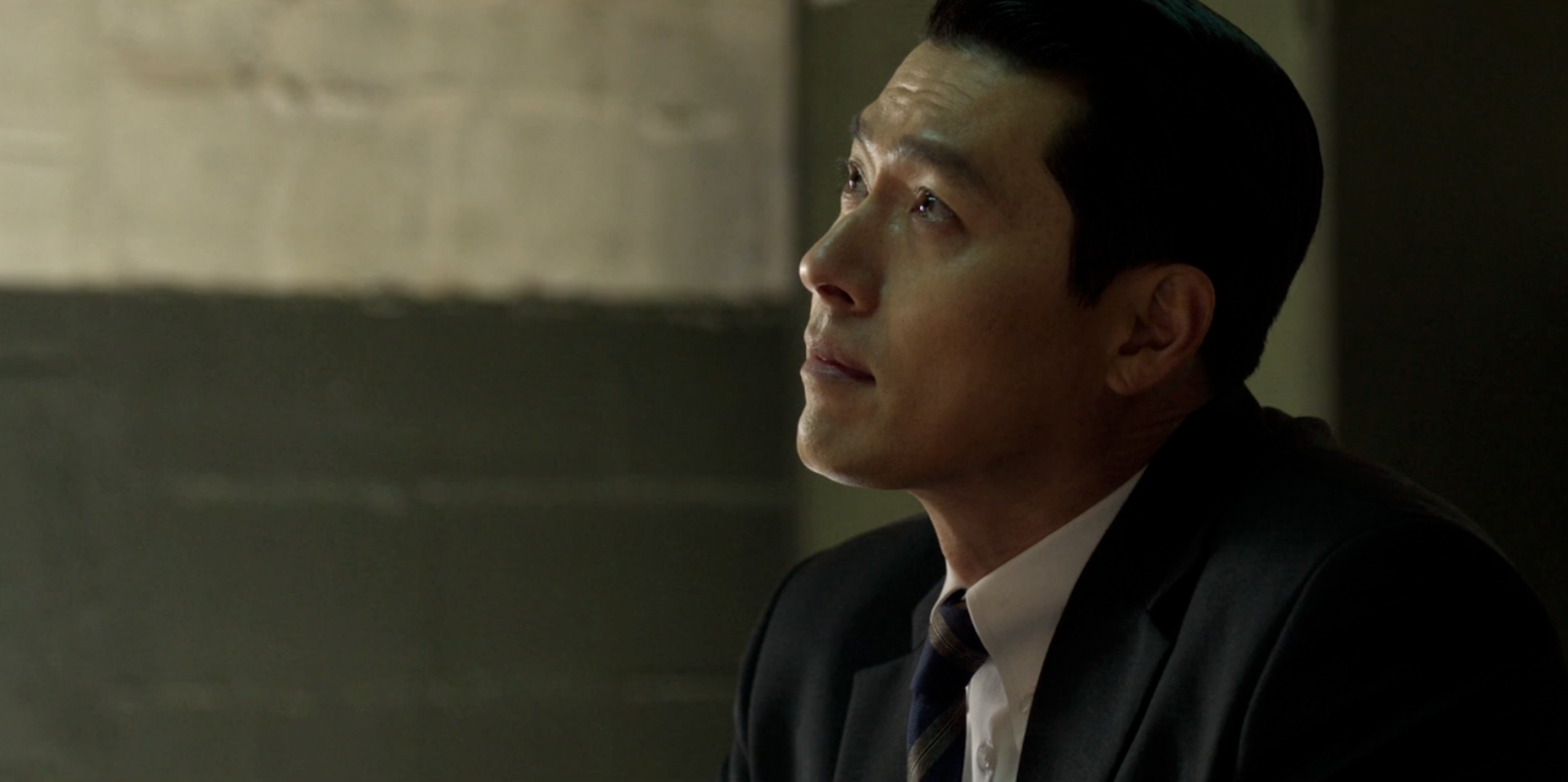
The world belongs to the guys with power.
How many times do I have to tell you?
That’s Baek Gi-tae’s philosophy, delivered with the weight of a man who has seen what powerlessness costs. But when his younger brother Gi-hyun rejects that philosophy—choosing honour over corruption, Vietnam over his brother’s dirty money—we witness the fracture that will define Season 2.
Episode 5 of Made in Korea has left international viewers with questions. Not because the storytelling is unclear, but because the drama assumes a depth of knowledge about 1970s Korea—its military culture, KCIA operations, and the twisted moral logic of rapid economic development—that most international audiences lack.
So let’s unpack what you’re missing.
The Military Base Incident: Understanding Command Responsibility
The question keeps appearing in forums: What exactly happened at the military base with Baek Gi-hyun? Why is he being blamed when he didn’t pull the trigger?
Here’s what happened. Gi-hyun, played by Woo Do-hwan, is a military officer.
During a training exercise, one of his subordinates committed an act of retaliatory gunfire, killing another soldier. Gi-hyun didn’t pull the trigger. But under the principle of command responsibility—jihwi chaegim in Korean—he’s being held accountable.
This isn’t arbitrary. It’s rooted in Confucian hierarchy, where the person at the top carries all responsibility for those below. In Korean military culture, heavily influenced by both Japanese colonial-era training and American post-war military systems, the commanding officer is responsible for everything that happens under their watch. Tragedies. Violence they didn’t commit. Everything.
The Weight of the Uniform
And in 1970s Korea, a military career was everything. It was the primary path to power, respect, and social mobility. So when something goes wrong, the consequences are devastating.
There’s a Korean expression: ot-eul beot-neunda—“taking off the uniform.”
Literally, it means removing your military clothes. Figuratively, it means career death, social death, and family shame. When Gi-tae tells his brother,
“It won’t be you taking off the uniform. It’ll be your company commander,”
He’s offering to shift the blame using his KCIA connections. He can make the problem disappear.
But Gi-hyun has two options: accept discharge and destroy his military career, or volunteer for Vietnam deployment and prove himself through combat. He chooses Vietnam. Not because it’s the “safest” option, but because it’s his way of solving the problem—without his brother’s corruption, without compromise.
That choice is where the brothers split. That’s where the tragedy begins.
Why Gi-hyun Refused His Brother’s Help: The Wound of Blood Loyalty
To understand why Gi-hyun’s refusal cuts so deep, you need to understand something fundamental about Baek Gi-tae: he cherishes his family like his own life.
When Choi Yoo-ji asks, “What’s with this obsession over blood ties?” she’s hitting on Gi-tae’s deepest vulnerability. He doesn’t just love his younger siblings—he raised them. In 1970s Korea, where many families lost parents early during the Korean War, it was common for the eldest brother to become a surrogate father when there was a significant age gap between siblings.
Gi-tae fed Gi-hyun. Clothed him. Protected him. And even now, as he builds his empire of drugs and corruption, his power hunger is partly for his siblings. He genuinely believes that even if everyone in the world betrays and backstabs him, his blood relatives won’t.
The Weakness That Choi Yoo-ji Sees
That’s why Choi Yoo-ji tells Security Chief Cheon Seok-jung:
“Baek Gi-tae’s deep affection for his younger brother Gi-hyun is a weakness. It interferes with business.”
And she’s right. When Gi-hyun walks away—when he says, “Worry about your own life, brother. Don’t block my path along with yours”—he’s not just rejecting help. He’s rejecting his brother’s entire philosophy. He’s saying: I won’t let your corruption destroy my honor.
This raises the question that will haunt Season 2: If Gi-hyun returns from Vietnam and stands in Gi-tae’s way, if the brother he loves like a son becomes an obstacle, can Gi-tae remove him? Like, he removes everyone else? Or will blood prove stronger than power?
“This Is Patriotic”: When Drug Dealing Became National Service
One of the most unsettling aspects of Gi-tae’s character is his genuine belief that his drug business is patriotic. When he tells his sister So-young, 🔗 “This is patriotic,” his eyes and earnest tone suggest he truly believes it. It’s not just rationalization—it’s conviction.
And here’s what makes this so disturbing: in 1970s Korea, this logic actually worked.
The “Let’s Live Well” Era
During South Korea’s rapid economic development under President Park Chung-hee, the national slogan was jal saraboja—“Let’s Live Well.” Export equaled patriotism. The government pushed for foreign currency at all costs, and according to historical records and archived documentation, some manufacturers exported products of questionable legality to Japan, sometimes justifying these exports as “earning dollars for the nation.”
The twisted logic went like this:
“We’re taking money from Japan—our former colonizers—so it’s revenge. And patriotism.”
Why did this work? Three reasons converged. Post-colonial resentment: Korea had been colonised by Japan from 1910 to 1945, and economic revenge felt morally justified. Desperate economic situation: In the 1960s, Korea was one of the poorest countries in the world, and survival trumped ethics. Government-sanctioned greed: as long as you brought in foreign currency, questions weren’t asked.
The Monster Born from an Era
In the 1970s moral logic of rapid economic development, money was patriotism. It didn’t matter what you sold—weapons, textiles, questionable pharmaceuticals—if it brought in dollars, it served the national interest.
Made in Korea isn’t inventing this. The writers did their research. Historical documentation confirms that some operations used exactly this justification. And that’s what makes Gi-tae so terrifying. 🔗 He’s not a cartoon villain. He’s a product of his era, shaped by a time when moral boundaries were redrawn in the name of national survival.
The KCIA: Korea’s Parallel Government
Another confusion for international viewers: Why can’t Prosecutor Jang Geon-young just arrest Gi-tae? Why does the law seem powerless?
Because in 1970s Korea, the KCIA—the Korean Central Intelligence Agency, or Jungang Jeongbobu—was above the law.
A State Within a State
Established in 1961 after a military coup, the KCIA’s official purpose was national security, counter-intelligence, and protecting the president. Its actual power, according to declassified documents and historical records, was far more expansive. The KCIA operated without oversight—no checks, no balances. It had unlimited arrest authority and could detain anyone without a warrant. It reported directly to the president, bypassing all other government agencies. It ran torture facilities, most infamously the Namsan Building where interrogations took place. And it controlled the economy, deciding which businesses succeeded or failed.
In the show, there’s a moment that perfectly captures this dynamic. Pyo Hak-su, the Presidential Security Chief’s man, looks at Prosecutor Jang and asks:
“Gamdang ganeunghaeyo?”—“Can you handle this?”
The Threat Wrapped in a Question
This phrase is a cliché in Korean dramas, but it’s based in historical reality. It’s what someone with power says to someone without power. It’s not a question—it’s a threat. It means: “Do you understand who you’re dealing with? Do you understand the consequences of challenging me?”
Prosecutor Jang has legal authority. But the KCIA has real authority. And that distinction is everything.
The KCIA’s power only ended in 1979 when KCIA Director Kim Jae-gyu assassinated President Park Chung-hee. Yes, the KCIA director killed the president. That’s how powerful—and how dangerous—the KCIA was. So when Gi-tae secures KCIA backing through Hak-su, he becomes untouchable. Not because he’s brilliant, but because he’s protected by the most powerful organization in Korea.
Where Is Woo Do-hwan? A Season 2 Prediction
The most frequent complaint from international viewers: “It’s PAINFUL that Woo Do-hwan has only appeared TWICE.”
I understand the frustration. But Season 1 is Gi-tae’s story—we’re watching his rise from KCIA operative to power broker. Gi-hyun appears in Episodes 2, 5, and 6 (the finale drops January 14), but his real story begins in Season 2.
What Vietnam Will Do to Gi-hyun
Here’s what has me most curious. Gi-tae saw war. He saw soldiers used as cannon fodder for officers climbing the ladder—chulseharyeoneun nomdeul-eul wihan chongalbatgi, bullet shields for men chasing promotion. That experience radicalized Gi-tae. That’s what made him believe power is the only thing that matters.
So when Gi-hyun experiences the same war, when he sees the same corruption, the same brutality, the same betrayal, will he stay righteous like Prosecutor Jang Geon-young? Or will he understand his brother’s hunger?
Will he become another Baek Gi-tae?
When Two Desires Collide
And if he does—if two men with the same desires collide—that’s the world Director Woo Min-ho draws so well. Racing toward the same summit in a fight where it’s you or me, where someone must fall. A brutal world of power where yesterday’s enemy becomes today’s ally, and today’s brother might become tomorrow’s obstacle.
One thing is certain: Gi-hyun isn’t weak. He’s not naive. He’s formidable. And Season 2 will show us just how formidable when he returns from a war that transforms everyone it touches.
The Cigarette Ritual: Choreographed Hierarchy
A final note on something that bothers some international viewers: the constant smoking.
Yes, it’s 1970s Korea—everyone smoked. But there’s a deeper layer here. In Made in Korea, smoking is power negotiation. Watch carefully: Who offers the cigarette? Who accepts? Who lights it? Who refuses?
Every cigarette is a power move. When Gi-tae offers you a cigarette, he’s establishing dominance. When you accept, you’re acknowledging his status. When you refuse, you’re asserting independence.
In 1970s Korean business culture, you couldn’t just say “I don’t trust you” or “I’m more powerful than you.” But you could refuse someone’s cigarette. The smoking isn’t random—it’s choreographed hierarchy, a silent language of power dynamics that everyone in that era understood instinctively.
Racing Toward Tragedy
Episode 6—the Season 1 finale—drops January 14. And based on Episode 5’s ending, where Gi-tae now has the Presidential Security Chief protecting him while his brother heads to Vietnam, I think we’re racing toward tragedy.
Made in Korea is dense, layered, and assumes viewers understand 1970s Korean history, KCIA operations, military culture, Vietnam War context, and Park Chung-hee era economics. Most international viewers don’t have this context. But now you do.
The question the show keeps asking—the question that will define Season 2—is this: Is power stronger than blood? When Gi-hyun returns from war carrying the same hunger his brother has, when two men shaped by violence and betrayal stand on opposite sides, which bond breaks first?
We’ll find out soon enough. The world belongs to the guys with power. But what happens when the guys with power are brothers?
Made in Korea Season 1 finale airs January 14 on Disney+.
I’ll be sharing Korean drama news fast in my newsletter (probably biased toward my faves lol). Want in? 🔗 Subscribe here
더 보기: Made in Korea Episode 5: What International Viewers Are Missing
- The Raft Broke. So Did Something Else.
- Weak Hero isn’t just an action drama; It’s a cautionary tale — Renewed Version
- This Is How Choi Hyun-wook Shows Up | Curtain Up, Class! Teaser Review
- Your Reactions to The King’s Warden: From Wet Raft Scenes to Hamster Cheeks
- The King’s Warden: Hidden Details You Completely Missed
⛔️ Copyright Disclaimer: All drama footage, images, and references belong to their respective copyright holders, including streaming platforms and original creators. Materials are used minimally for educational criticism and analysis with no intention of copyright infringement.
🚫 Privacy Policy: This site follows standard web policies and does not directly collect personal information beyond basic analytics for content improvement. We use cookies to enhance user experience and may display advertisements.