Five subtitle versions. One character. Completely different personalities.
If you’ve ever felt like Korean Weak Hero fans understand Su-ho on a different level — you’re not imagining it.
After analysing the original Korean dialogue and the official script book, I can tell you: we’ve been watching a subtly different character. The Su-ho that Korean audiences fell for is funnier, more emotionally layered, and far more charming than any subtitle track could capture.
Five Subtitles, Five Different Su-hos
Picture this: you watch your favorite Su-ho scene, but depending on which platform you’re streaming on, you’re essentially watching a different person.
One of my YouTube subscribers recently compared five English subtitle versions of the same Su-ho moment — and got five completely different readings of his personality.
This isn’t a minor translation hiccup. We’re talking about the fundamental character traits, emotional beats, and comedic timing that shape everything we think we know about Su-ho. The version Korean audiences fell in love with operates on a completely different emotional wavelength.
The Soup Scene: The “Disgusting” Joke
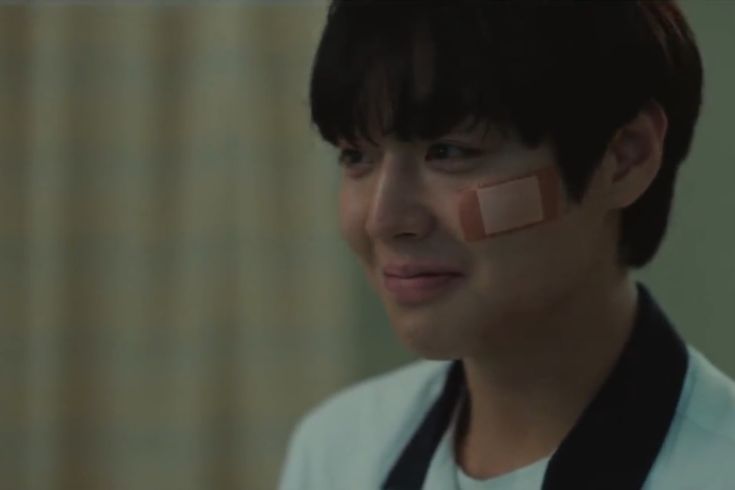
Let’s talk about the most heartwarming scene in Season 1 — the ox bone soup moment in Episode 4, when Si-eun gives us his first real smile.
Here’s what the subtitles didn’t tell you.
In the original Korean, Su-ho isn’t asking Si-eun for soup. He’s muttering to himself after getting his injuries treated: “I’m so hungry, I want ox bone soup.”
Si-eun — observant as always — overhears this offhand comment and goes out to buy it. Unprompted. When Su-ho opens the container, his actual words are:
“What is this feeling? I’m getting goosebumps right now.”
He’s genuinely floored. This quiet kid not only caught his random muttering, but acted on it. Then comes the line English subtitles sanitized completely:
“What’s wrong with this kid? No wait — you’re being too warm. Your eyes, your actions, the way you talk, your expression — it’s disgusting.”
Su-ho’s Deflection Mechanism
Before you panic — he’s joking. This is textbook Su-ho.
When he’s genuinely moved by something, he deflects with humor instead of showing vulnerability directly. What he’s actually saying:
“I’m so overwhelmed by your unexpected kindness that I have no idea what to do with these feelings, so I’m going to tease you about it — because that’s how I cope.”
The subtitles translated this as “it feels strange” — and honestly? That was the right call. If they’d used “disgusting,” international viewers would’ve thought Su-ho was being cruel. Translators made the best choice they could under impossible circumstances.
“Does He Have a Beggar in His Stomach?”
Earlier in the same episode, when Su-ho keeps complaining about being hungry, Si-eun responds with a line subtitled as “Is this guy a bottomless pit?”
Decent translation. But the original is: “Does he have a beggar in his stomach?”
This is a classic Korean idiom for someone who eats endlessly. And here’s what makes it beautiful — this is Si-eun making a rare joke. Su-ho’s humour is rubbing off on him. These small exchanges build their friendship in ways that can’t survive direct translation.
The “Hyung” Games
One of the most significant translation losses is Su-ho’s constant, deliberate misuse of honorifics.
Throughout the series, Su-ho jokingly calls himself hyung (older brother) to Si-eun and Beom-seok — despite all three being the same age. When he tells Si-eun about his three part-time jobs:
“Why, do you want to call me hyung?”
To Beom-seok, repeatedly: “Don’t you trust hyung? Just trust hyung.”
This running gag isn’t random. It reveals:
- Natural leadership through care, not dominance
- A maturity that comes from being his family’s breadwinner early
- Affection expressed through protective teasing
- An instinctive navigation of Korean social hierarchy
“Si-eun-ssi”
Su-ho consistently calls Si-eun “Si-eun-ssi” — roughly equivalent to “Mr Yeon” in English. It’s the honorific you’d use with a coworker you’re not particularly close to.
Su-ho uses it because he’s so close to Si-eun. It’s the equivalent of calling your best friend “Mr. John” — funny precisely because of the gap between the formal address and the intimacy of the relationship.
(🔗Watch the full breakdown of this and the “disgusting” scene)
Script Book Secrets
The official Weak Hero Class 1 script book fills in details that reframe several key scenes.
In Episode 4’s amusement park chase, when Gil-soo pulls a knife, Su-ho immediately taunts him: “Hey! You need a good beating!”
That wasn’t reckless bravado. According to the official stage directions, Su-ho deliberately provoked Gil-soo to pull the knife-wielding threat toward himself and away from Si-eun. Calculated. Protective. Entirely intentional.
Su-ho vs. Season 2 Characters
The contrast with Season 2 makes Su-ho’s communication style even more striking. When Go-tak or Baku feel something, they say it — directly, without filtering.
Su-ho works in reverse. The more emotional he is, the more he deflects with humor. It’s a specifically teenage-boy mode of handling feelings, especially for someone who’s had to be strong for his family from an early age.
The Wait Outside Daesung Academy
Episode 6. Su-ho parks his motorcycle outside Daesung Academy and waits for Si-eun to finish late classes.
The script book directed Choi Hyun-wook to show physical signs of a long wait — stretching both legs to indicate stiffness. When Si-eun finally appears, Su-ho calls out “Si-eun-ssi!” with that signature playful formality.
Consider Su-ho’s schedule: three part-time jobs. His time isn’t free. That patient wait is a deliberate gesture.
The “Past Life” Comment and the Rom-Com Structure Behind It
Remember Su-ho’s comment about being “married in a past life” when he spots Si-eun on the bus?
Director Yoo Soo-min revealed at the Weak Hero homecoming event that he specifically told Choi Hyun-wook and Park Ji-hoon to play their dynamic like the push-pull between leads in a melodrama. That “past life” line comes directly from that rom-com directing framework.
The Su-ho We Were Missing
When you understand what Su-ho is actually saying, his relationships with Si-eun and Beom-seok read completely differently.
We weren’t just missing jokes. We were missing a character who builds intimacy through cultural wordplay, expresses care through protective humor, and navigates teenage masculinity with a surprising amount of emotional intelligence.
The Su-ho Korean viewers fell for isn’t the strong, silent type. He’s a linguistic artist — one who paints his feelings in jokes, constructs closeness through honorific play, and creates space for vulnerability through the cushion of comedy.
Every Rewatch Is a Treasure Hunt
Once you know what to look for, every Su-ho scene opens up. The deflection smiles. The strategic honorifics. The protective positioning. The details were always there — waiting for the cultural context that brings them to life.
Whether you’re revisiting Season 1 or waiting on Season 3, you’re watching one of K-drama’s most nuanced portrayals of teenage friendship, masculinity, and emotional growth.
Want to hear these scenes with original Korean audio and cultural breakdown? 👉 The Wordplay That Made Si-eun Laugh | Weak Hero Class 1
📥 Free Ebook: Behind the K-Drama Subtitles — Weak Hero A character analysis that doubles your enjoyment of Weak Hero — built from the best subscriber discussions on this channel 👉 Download here — it’s free
Read More: Ahn Su-ho’s Hidden Personality: What Weak Hero Subtitles Missed
- The King’s Warden: 5 Hidden Layers You’ll Wish You Knew Sooner
- The Word “Upset” Doesn’t Cover It: A Curtain Up Class Episode 2 Review
- Weak Hero Class 1: Hidden Details You can’t unsee — Costumes, Callbacks & Cultural Context
- The Raft Broke. So Did Something Else.
- Weak Hero isn’t just an action drama; It’s a cautionary tale — Renewed Version